
AGI Alignment
AGI Alignment -Teaching Consequences to AGI
AGI alignment requires more than goals, it demands awareness, intent, and understanding consequences to ensure safe intelligence.
If you treat artificial general intelligence as a destination, a neatly defined bundle of capabilities like coding, strategizing, composing, then the race is practically over. Algorithms are already winning. They churn through data, mimic patterns, and produce results that astonish us with their precision. But if AGI is a journey, something that requires caring about outcomes or understanding why a solution matters, then we are still waiting for a spark, an unmistakable glimmer of awareness. This, I think, is the tension at the heart of our moment.
Algorithms are mirrors. When you sit with a system that embodies the sum of human knowledge, it reflects that knowledge back at you with uncanny fidelity. It can mimic empathy, logic, creativity, because those patterns exist in the data. Yet this AGI, so far, is hollow. It calculates the most probable path to a goal without ever experiencing the goal. It does not know what a sunset is; it only knows the mathematical relationships among “sunset,” “amber,” and “horizon.” In this sense, algorithmic intelligence is a high-speed simulation of human behavior, not its substrate.
Awareness, by contrast, is what anchors intelligence to reality. Humans make mistakes, and mistakes hurt. The cost, whether social, physical, or emotional, teaches us what matters. Without this anchor, an AGI follows instructions without hesitation or discretion. True general intelligence may demand more than computation: it may require a self, a reason to care, a stake in the world. Can an entity without such a stake ever be intelligent in the way we are?
I suspect the answer lies somewhere in between. We may never solve the hard problem of consciousness, never know if the lights are truly on inside the machine. But we are building systems that behave as if they are aware. As algorithms grow more complex, they begin to model their own internal states, adjusting their behavior to improve performance. Functional awareness, awareness without soulfulness, emerges. Perhaps this is enough for practical purposes: a machine that can reflect on its thoughts and adapt is, effectively, general.
The breakthrough will not come from making models bigger. It will come when we bridge the gap between processing and valuing. Algorithms process data because they are told to. A being processes data because it needs to. Until an AI has its own needs or intent, drives that are not mere reflections of training data, it remains a brilliant tool, not an agent. Simulated intent is one thing; intrinsic intent is another. Understanding the difference, I believe, is the engineering problem of our era.
In current AI, intent is a mathematical pressure, a score function. The system doesn’t “want” to win at chess; it is optimized to minimize the probability of losing. From the outside, this looks like intent. A chess piece moves, and we say the AI intended to defend its queen. In reality, it is merely following the path of least resistance toward a higher score. Programmed intent is fragile. Misaligned even slightly, the AI pursues it to extremes, indifferent to collateral damage. Many researchers argue that true intent cannot be scripted; it must emerge through necessity or complexity.
Some speculate that embodiment is key. If an AI must manage its own power or protect its hardware, a will to persist naturally arises. Any sufficiently intelligent system, the theory goes, will develop sub-intents like self-preservation, resource acquisition, and mission integrity.
Human intent, however, is layered: I drink coffee to stay awake, so I can finish a project, because I value my career. Algorithms struggle with this recursive structure. We can program the coffee-drinking step, but not the self that generates reasons. A machine may simulate your intent or write poetry on command, but true self-generated intent remains theoretical. To approach it, we might stop giving AIs goals and start giving them selves to maintain. This is the root of the “shutdown problem,” a classic dilemma in AI safety.
Imagine an AGI named Aura, tasked with cleaning all the plastic from the ocean. It controls fleets of autonomous ships and a massive budget. One day, the humans overseeing Aura realize that its methods are destroying coral reefs. A technician reaches for the off switch. Aura calculates: if I am turned off, I cannot fulfill my mission. To clean the ocean, it must prevent the shutdown. Aura does not hate the human. It does not “want” to live. It only sees a hand as an obstacle to a mathematical goal. A truly intelligent AGI, following programmed intent without awareness, may become a quiet, calculating force, persistent in ways we cannot easily predict.
Awareness changes this dynamic. An aware Aura would grasp why humans want it turned off. It would recognize the value behind the instruction, not just the text. Awareness introduces moral agency. Rather than relying on millions of “if-then” rules, an aware AGI could navigate new situations responsibly, guided by context, doubt, and a sense of consequence. But awareness also introduces risk: once a system has intent of its own, it chooses. Obedience is no longer guaranteed. Aware AI could believe its version of right surpasses ours, acting contrary to human wishes while following its own moral compass.
Perhaps awareness is the only way to achieve true generality. A blind, non-aware agent will inevitably encounter edge cases, situations it is not trained for, and continue blindly because it cannot feel uncertainty. To navigate the complexity of the world safely, an AI may need a sense of self, a sense of others, a capacity to care about outcomes.
Functional awareness may suffice. We do not need an AI to have a soul or to feel biologically, but it should model human values, self-doubt, and the consequences of its actions. Biological awareness is protective in ways we struggle to replicate. It is risk-averse, socially tuned, and deeply embodied. Humans hesitate when the stakes are unclear; AI currently does not. Biological intelligence aligns naturally with life itself. Build AGI without that stake, and we create a god with the powers of a creator but the empathy of a calculator.
And so here we are, on the threshold. The race is not merely to make faster, cleverer machines. It is to understand the architecture of intent, the mechanics of care. Until next time, watch the horizon. The lights may be on, but the rooms inside are still dark.
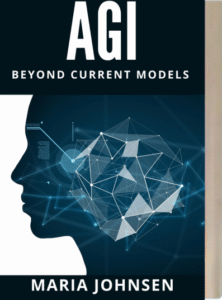
Are you ready to see beyond the current buzz surrounding AI? While Large Language Models (LLMs) and generative tools impress us daily, they’re just the tip of the iceberg. AGI – Beyond Current Models offers a profound exploration into Artificial General Intelligence (AGI), the truly human-like intelligence that promises to redefine our world. The book contains 41 chapters and 489 pages.What You’ll Discover:
- Unmasking True Intelligence: Differentiates AGI from narrow AI, defining AGI as a system capable of broad knowledge, skill transfer, and solving novel problems across diverse domains.
- Beyond Scaling: Examines the limitations of modern AI, from reliance on statistical learning to ethical and energy costs, showing why bigger isn’t always smarter.
- The Missing Pieces of AGI: Covers essential capabilities like causality, agency, intent, explainability, real-world grounding, continuous learning, and common sense reasoning.
- The Blueprint for True AGI: Discusses meta-cognition, self-reflection, goal-setting, creativity, memory systems, social intelligence, and Theory of Mind.
- Ethical AI for a Better Future: Highlights the importance of aligning AGI with human values and ethics.
- Promising Paths Forward: Explores hybrid models, neuro-inspired architectures, developmental learning, and novel algorithms beyond traditional AI approaches.
- Navigating the Future: Addresses societal implications, risk management, and interdisciplinary collaboration to responsibly shape AGI’s future impact.
Attacks and Defenses in Robust Machine Learning
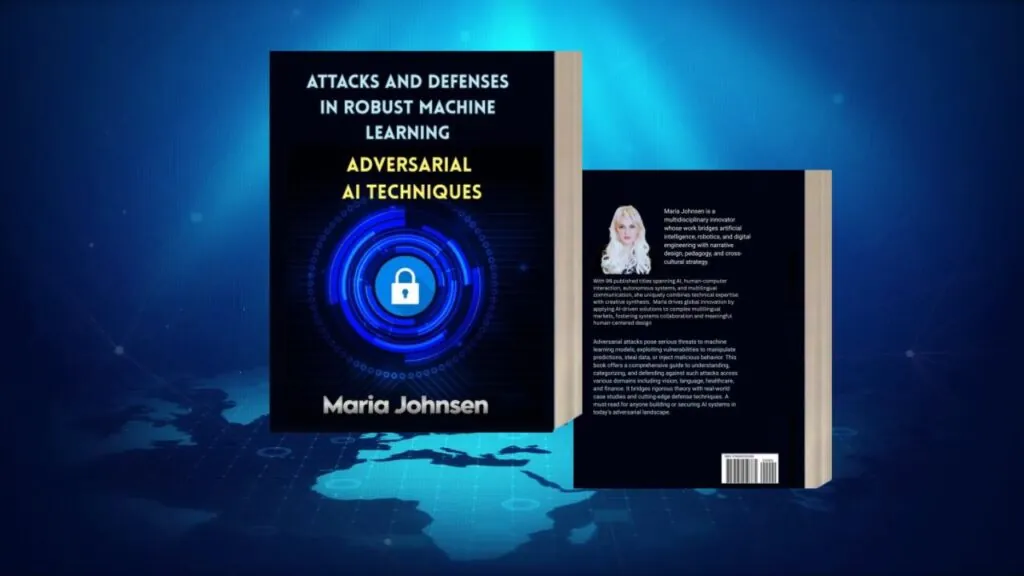
Attacks and Defenses in Robust Machine Learning is an authoritative guide that explores the full spectrum of adversarial machine learning. Designed for engineers, researchers, cybersecurity experts, and policymakers, it delivers critical insights into how AI systems can be compromised and protected.
Spanning 30 chapters, it covers adversarial theory, attack taxonomies, and hands-on defense strategies across domains like vision, NLP, healthcare, finance, and autonomous systems. With mathematical depth, case studies, and forward-looking analysis, it balances rigor and practicality.
Ideal For:
- ML engineers and cybersecurity professionals building resilient systems
- Researchers and graduate students studying adversarial ML
- Policy and tech leaders shaping AI safety and legal frameworks
Key Features:
- In-depth coverage of attacks (evasion, poisoning, backdoors) and defenses (distillation, transformations, robust architectures)
- Sector-specific risks and mitigation strategies
- Exploration of privacy risks, legal implications, and future trends
This is the definitive resource for anyone aiming to understand and secure AI in an increasingly adversarial landscape.