

AI Search
AI Search: The Internet’s Silent Collapse
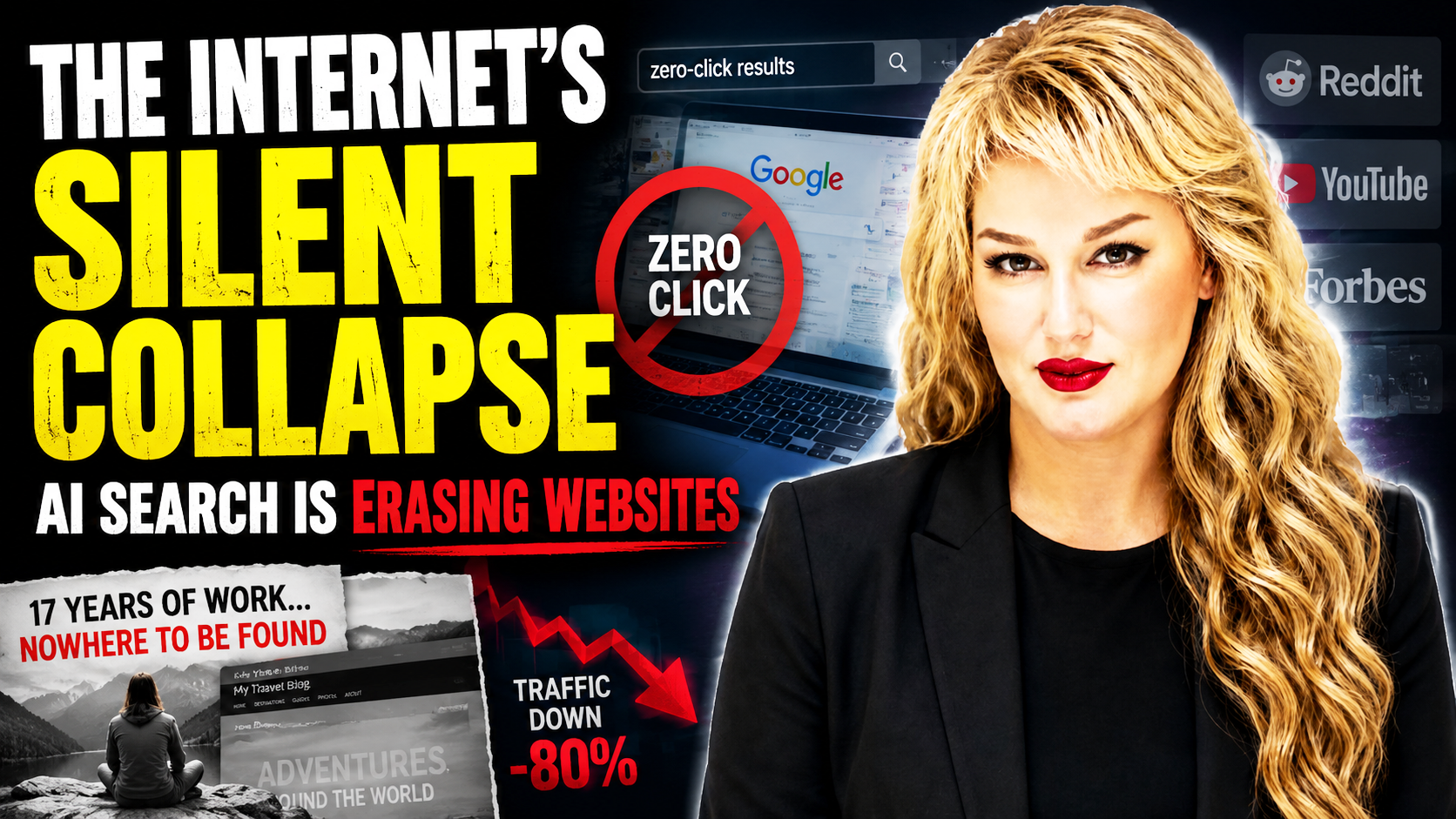
AI search is erasing websites. Businesses, bloggers, and creators say years of work vanished from Google overnight.
For nearly two decades, the internet operated on a simple bargain. If you created useful content, search engines would help people find it. Bloggers, journalists, travel writers, reviewers, educators, and small businesses spent years building websites under that assumption. Google became the gateway to the open web, distributing traffic across millions of independent sites worldwide.
That era is ending.
The rise of AI-powered search systems such as Gemini, ChatGPT, and AI-generated search summaries is fundamentally changing how information is discovered online. Instead of directing users toward websites, search engines increasingly answer questions directly inside their own interfaces. To users, it feels frictionless. To independent publishers, it feels like slow erasure.
For years, search traffic was the lifeblood of the internet economy. Between roughly 2010 and 2022, entire industries emerged around SEO, blogging, affiliate marketing, and digital publishing. A travel blogger could spend years documenting hidden places, writing detailed guides, sharing photography, and slowly building authority in search rankings. That work translated into visitors, ad revenue, sponsorships, and eventually a sustainable business.
Now many of those websites are disappearing from visibility almost overnight.
One travel blogger I knew spent 17 years traveling the world and documenting his experiences online. His website contained firsthand knowledge from countries most people would never visit themselves. Detailed itineraries, local recommendations, survival advice, photography, and cultural observations filled thousands of pages. Yet today, much of his content is nearly impossible to find through Google search.
- Not because the work became worse.
- Not because the audience disappeared.
- But because the structure of search itself changed.
The modern search engine is no longer optimized to send users outward. It is optimized to keep them inside.
This is the rise of the “zero-click” internet, where users receive answers directly on the search page without ever visiting the original source. AI summaries, featured snippets, shopping integrations, instant answers, and conversational search interfaces increasingly eliminate the need to click links at all. Search is shifting from indexing the world’s information to synthesizing it for you inside a single interface.
That changes the economics of the web entirely.
The old internet rewarded discoverability. The new internet rewards enclosure.
At the same time, Google appears to be consolidating trust into a handful of massive platforms. Reddit threads, Quora discussions, YouTube videos, Wikipedia, and large media conglomerates increasingly dominate search visibility, while standalone independent sites vanish into obscurity. The irony is difficult to miss: for years, Google discouraged “forum-like” low-quality discussions. Now Reddit often outranks deeply researched independent articles written by subject experts.
The web is splitting into two extremes.
On one side are giant user-generated ecosystems with massive engagement metrics. On the other are enormous corporate publishers with institutional authority. Between them lies a collapsing middle: independent websites, niche experts, personal blogs, and small online businesses that once defined the character of the open web.
This is not just a crisis for hobbyists; it is a market failure for small businesses.
Unlike giant corporations with advertising budgets and platform leverage, independent publishers relied heavily on organic search visibility. A single algorithm shift or AI-search rollout can wipe out years of growth in months. Some businesses report traffic collapses exceeding 50 percent. Others simply disappear from discoverability altogether.
The emotional impact is profound. Many creators describe feeling digitally erased. Imagine spending 15 years building a library of knowledge only to watch it become invisible because an AI-generated paragraph replaced the need for users to visit your website.
What makes the transition even more unsettling is that many creators unknowingly trained the systems replacing them. Their tutorials, reviews, travel stories, and expertise became part of the data ecosystem modern AI systems learned from. The knowledge still has valu, but increasingly, the value is extracted by platforms rather than returned to the people who created it.
The broader consequences extend beyond economics.
When fewer independent websites survive, the internet becomes more centralized. Information flows through a shrinking number of gatekeepers. Diverse voices struggle to compete against machine-generated summaries optimized for speed and retention. Nuance is compressed into simplified answers. Exploration gives way to convenience.
The internet once felt like wandering through millions of independently owned spaces. Today it increasingly resembles a handful of giant interfaces competing to become the final destination for all human knowledge.
That does not mean independent publishing is completely dead, but survival now requires adaptation. Direct audience relationships matter more than ever. Email newsletters, podcasts, YouTube channels, private communities, and subscription models are becoming essential because relying entirely on search traffic is no longer safe.
Creators with unique perspectives, firsthand expertise, or strong personal brands may still survive. Generic SEO content farms probably will not. The future may reward authenticity over scal, but the transition will be brutal for millions who built businesses under the old rules of the internet.
AI search is not simply a technological upgrade. It is a structural transformation in who controls visibility online.
For users, the shift feels seamless. Answers arrive faster. Search becomes conversational. Convenience increases.
But beneath that convenience, something important may be disappearing: the open web itself.
The danger is not merely that AI becomes smarter. The danger is that fewer humans can afford to create the original knowledge AI depends on in the first place.
And if independent creators disappear, the internet may become efficient, centralized, frictionless, and far less human.
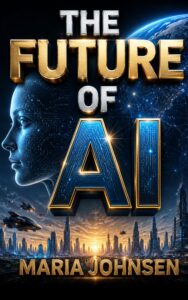
In my book, “The Future of AI” I calculated and predicted many of the technological and societal shifts that are now beginning to unfold in real time. Get your copy!
Hardcover with color interior
Amazon USA Amazon Canada Amazon UK Amazon Australia Amazon Germany Amazon France
Amazon Spain Amazon Italy Amazon Poland Amazon Japan Amazon Netherlands
Paperback ( black and white interior)
Amazon USA Amazon Canada Amazon UK Amazon Australia Amazon Germany Amazon France
Amazon Spain Amazon Italy Amazon Poland Amazon Japan Amazon Netherlands