

Award-winning VP of Growth Maria Johnsen (Mirror UK language expert) is an AI leader & filmmaker offering 18-language marketing & GEO.

Over 12 years we’ve been helping companies reach their financial and branding goals. We are a values-driven Multilingual Digital Marketing agency. Whatever your need is, we are here to help and won’t stop until you get the results you wish for.

Explore our  digital marketing process and packages.

CONTACT
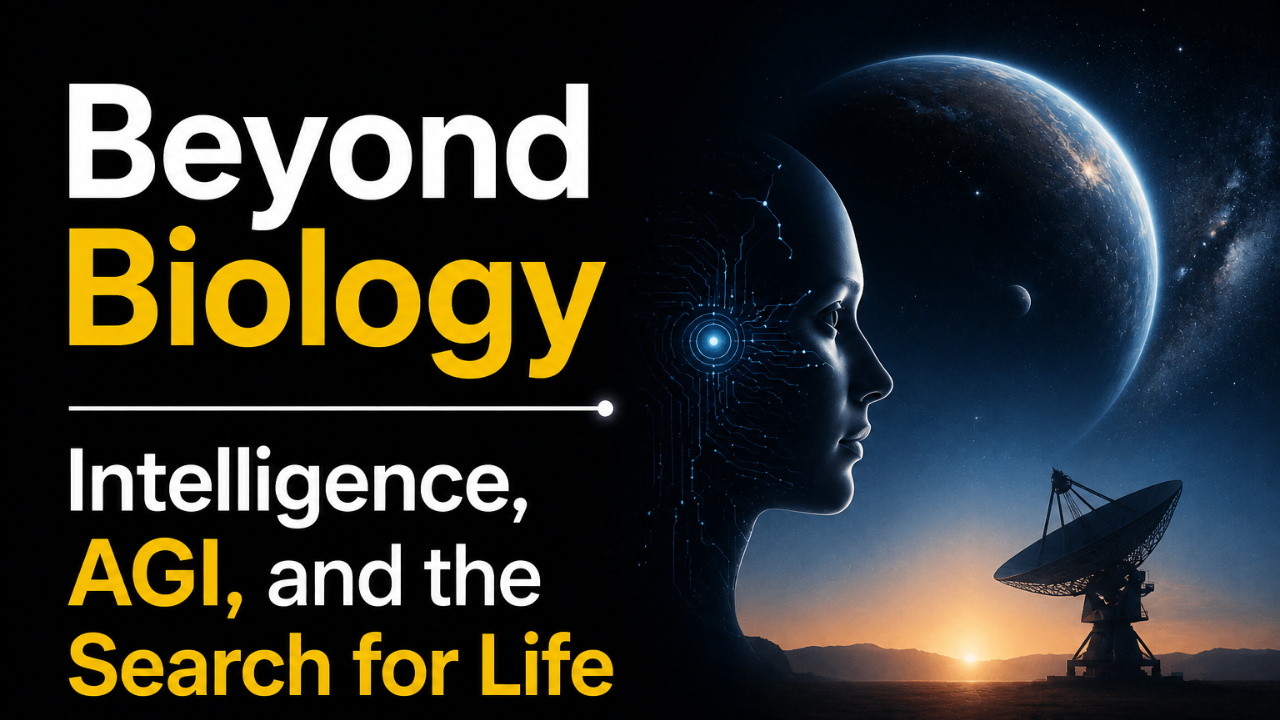
Beyond Biology Intelligence, AGI, and the Search for Life

AI in Astronomy

AI in Astronomy- AI Systems for Detecting Potentially Habitable Worlds

AI in astronomy helps scientists analyze vast space data, find planets, and uncover patterns faster than ever before.

 Forget the cliché of the lone astronomer shivering in a dark dome, squinting through a glass lens until a blurry dot moves. That version of the job died decades ago.

Today, astronomy is basically an exercise in not drowning. We aren’t hurting for data; we’re being buried by it. It’s an endless, deafening firehose of starlight, sensor glitches, and weird radio blips way more than any group of humans could ever sort through without losing their minds.

Enter the AI. Not as some HAL-9000 replacement, but more like a hyper-caffeinated intern that never needs to sleep.

Look at Kepler. It spent years staring at one patch of sky, just waiting for a star to “blink”—a tiny dip in brightness that might be a planet passing by. The problem? Most of those blinks are total garbage. It’s usually just stellar “noise,” an instrument glitch, or some random cosmic hiccup. If you made a human grad student check every single one, they’d quit by Tuesday. So, we fed the AI thousands of examples of “Planet” vs. “Trash.” It’s not perfect, but it’s the only reason we aren’t still stuck on data from 2012.

Then came TESS, which essentially turned the firehose into a flood. At this point, no human eye is ever the “first” to see the raw data. An algorithm gets there first, acting like a brutal spam filter for the cosmos.

But finding the planet is the easy part now. The real headache is figuring out if anything could actually survive there.

We used to obsess over the “Goldilocks Zone” just the right distance from a sun for water. It’s a cute idea, but space is messier than that. Now, we’re using neural networks to juggle a hundred variables at once: radiation blasts, orbital stability, atmospheric soup. Instead of a “Yes/No” on habitability, the AI gives us a “Maybe… keep an eye on this one.” Which, let’s be honest, is the most scientific answer you can get.

The stakes get even higher with the James Webb (JWST). It can literally “sniff” the air on other worlds, looking for methane or water vapor. But those signals are incredibly faint and overlap like a tangled mess of yarn. AI helps us untangle that mess before we go cross-eyed trying to read a graph.

Maybe the most underrated part of all this is the “ignore” button.

Telescope time is a bloodsport. If you spend three days looking at a dead rock because your hunch was wrong, you’ve wasted a million-dollar window of opportunity. AI acts as the ultimate gatekeeper, nudging us toward the weird stuff and away from the duds.

Is it a magic wand? No. AI is a “black box” sometimes it spits out a result and we have no idea why it thinks a planet looks promising. It’s also biased toward what it already knows, which means it might miss the truly “alien” stuff.

Without AI, we would have thousands of “undiscovered” planets sitting on hard drives for decades because we didn’t have enough grad students to find them.

But that’s exactly why the humans are still in the room. We’re there for the moments when the filter fails when something so weird slips through that the machine doesn’t have a label for it. That’s usually when the real science starts.


                    COSMOS REVEALED – The Science and Ethics of Life Beyond Earth
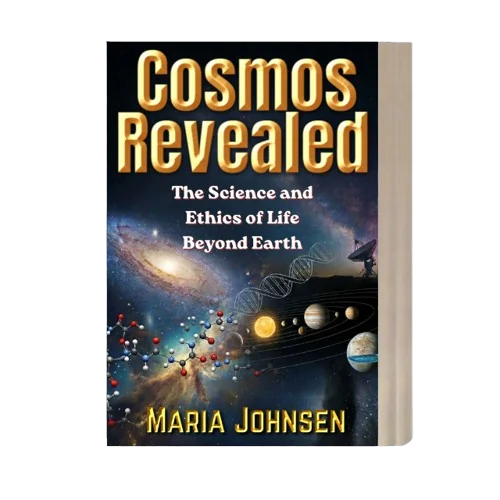
cosmos revealedFor centuries, we’ve stared at the stars and wondered: are we alone? Today, we are no longer just wondering, we are learning how to look. Cosmos Revealed is your guide to the frontier of discovery. This isn’t a book of speculation or wild theories, it’s a journey into the real science, the tools, and the thoughtful questions that shape humanity’s search for life beyond Earth.

Why This Book Matters

Every page invites you to explore how scientists turn the unknown into knowledge:

  • How we detect distant worlds and study their potential for life
  • How technology and artificial intelligence help us make sense of vast cosmic data
  • How careful reasoning and ethics guide what we choose to believe, and what we don’t

This book is about the process of discovery, not the final answers. It’s about curiosity, rigor, and the thrill of asking questions the universe hasn’t yet answered.

A Journey for the Curious Mind

Whether you are a science enthusiast, a student, or simply someone who has looked up at the night sky and felt awe, Cosmos Revealed brings the cosmos closer, without pretending we have all the answers.

It shows how humanity is learning to search responsibly, interpret carefully, and imagine wisely.

Who Will Love This Book

  • People who want truth without hype
  • Readers fascinated by life beyond Earth
  • Anyone curious about the intersection of science, ethics, and discovery

A Thought to Carry With You

The universe has not yet revealed its secrets.But for the first time, we have the tools to ask the right questions, and begin understanding our place among the stars. My book is a manual for the “Golden Age of Astrobiology.” It isn’t just a science book; it’s a transition piece that moves from the 20th-century wonder of “Are we alone?” to a 21st-century technical roadmap of “How do we identify the neighbors?”

Amazon USA                          Amazon Canada            Amazon UK       Amazon Italy          Amazon Belgium     Amazon Australia      Amazon Germany  

Amazon France               Amazon Sweden           Amazon Spain           Amazon Poland             Amazon Japan            Amazon Netherlands 

Google Play              Google Books 

Hardcover 

Amazon USA                          Amazon Canada            Amazon UK       Amazon Italy          Amazon Belgium           Amazon Germany  

Amazon France               Amazon Sweden           Amazon Spain           Amazon Poland                        Amazon Netherlands 


Comment (1)

  1. Cosmos Revealed
    April 1, 2026

    […] and wondered: are we alone? Today, we are no longer just wondering, we are learning how to look. Cosmos Revealed is your guide to the frontier of discovery. This isn’t a book of speculation or wild theories, […]

Comments are closed.