Artificial General Intelligence is often described in the language of salvation. In conference keynotes and venture, capital prospectuses, artificial general intelligence AGI arrives as a kind of secular messiah: it will cure disease, reverse climate change, untangle geopolitics, and perhaps even explain us to ourselves. The assumption lurking beneath this optimism is that the world’s hardest problems are, at root, problems of intelligence. Build a mind sufficiently powerful, and the rest will follow.
This assumption is wrong.
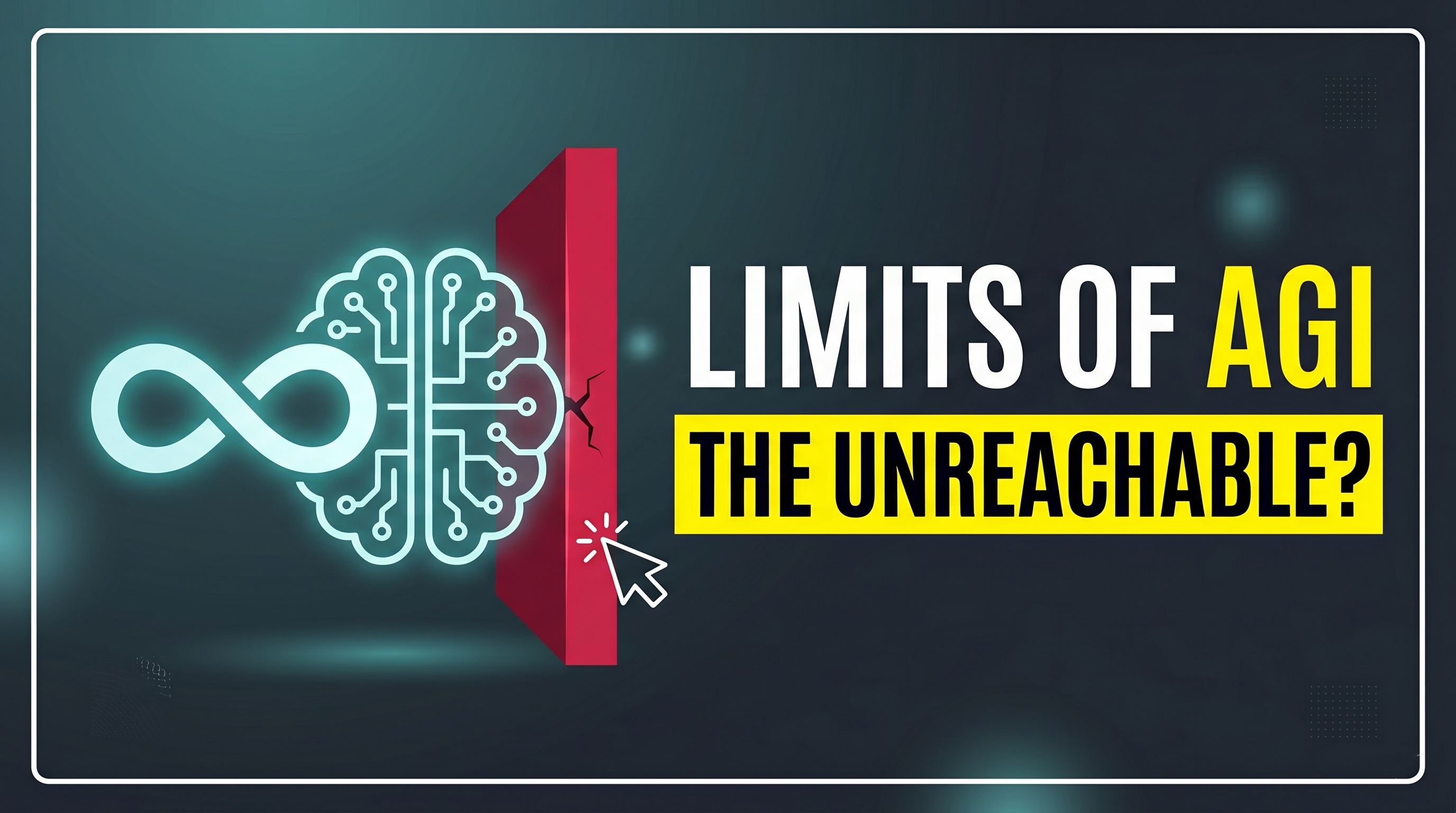
Even if artificial general intelligence were achieved tomorrow, an entity capable of reasoning across domains with fluency equal to or exceeding that of any human, it would encounter limits that are not technical but human, not computational but existential. These limits are not bugs to be engineered away. They are features of the kind of creatures we are.
Consider morality. An AGI could enumerate ethical systems with the ease of a librarian alphabetizing shelf. It could model the consequences of a policy decision down to the fifth decimal place of human suffering or economic gain. What it cannot do is tell us which moral trade, offs are correct. There is no objective function for justice that all humans agree upon. When societies argue over abortion, capital punishment, or freedom of speech, the disagreement is not caused by insufficient data. It is caused by incompatible values. Intelligence can clarify such disagreements; it cannot dissolve them.
Meaning presents a similar problem. Humans have spent millennia asking why they are here, what makes a life worthwhile, and how one should face death. An artificial general intelligence could summarize existentialism, Buddhism, and Stoicism in a single breath, offering customized life philosophies like a streaming, service recommendation engine. But meaning is not information delivered from the outside; it is something assembled internally, through experience, commitment, and loss. A machine can explain why Camus found solace in revolt. It cannot revolt for you.
Then there is power. Many of humanity’s failures persist not because we lack solutions, but because those solutions threaten someone’s interests. Hunger exists in a world that produces more than enough food. Wars continue despite universal awareness of their costs. Corruption flourishes even when everyone can see it. An artificial general intelligence might identify the optimal distribution of resources or the most stable diplomatic arrangement. What it cannot do is compel those who benefit from the status quo to surrender their advantage. Intelligence does not neutralize greed.
There are also limits imposed by reality itself. Certain problems are mathematically undecidable; others are physically impossible. No intelligence, artificial or otherwise, can build a perpetual motion machine or perfectly predict a chaotic system over long-time horizons. These are not challenges awaiting a smarter mind; they are walls built into the structure of the universe.
More subtle, but perhaps more important, is the problem of responsibility. As societies increasingly rely on algorithmic systems, the temptation grows to offload moral weight onto machines. If an artificial general intelligence recommends a policy that causes harm, who is to blame? The engineers? The politicians? The public? Responsibility cannot be automated without dissolving it. A machine can advise, but accountability remains stubbornly human.
Even creativity,often cited as an area where AGI will surpass us,has boundaries. An artificial general intelligence can produce a technically flawless novel or symphony, drawing from the entire archive of human culture. What it cannot possess is a body that ages, relationships that end, or the quiet pressure of knowing time is limited. Much of human art derives its power from precisely these constraints. Mortality sharpens expression. A machine, no matter how eloquent, does not fear oblivion.
And finally, there is death itself. AGI may help us live longer, healthier lives. It may even radically extend the human lifespan. But finitude is not merely a technical inconvenience; it is a defining condition of human existence. Our urgency, our attachments, our sense that moments matter,all of these are shaped by the fact that they end. Intelligence can soften death’s edges. It cannot erase its meaning.
None of this diminishes the transformative potential of artificial general intelligence. It may indeed cure diseases, accelerate science, and automate vast swaths of labor. But expecting it to solve problems rooted in value, power, and purpose is a category error. AGI can expand what we can do. It cannot decide what we ought to want, nor relieve us of the burden of choosing.
The fantasy of AGI as a universal solver reveals less about machines than about us. We want relief from ambiguity, from responsibility, from the uncomfortable fact that many of life’s hardest questions do not have answers, only responses. Intelligence, however artificial, does not absolve us of being human. It merely forces us to confront that fact more clearly.


 Are you ready to see beyond the current buzz surrounding AI? While Large Language Models (LLMs) and generative tools impress us daily, they’re just the tip of the iceberg. AGI – Beyond Current Models offers a profound exploration into Artificial General Intelligence (AGI), the truly human-like intelligence that promises to redefine our world. The book contains 41 chapters and 489 pages.