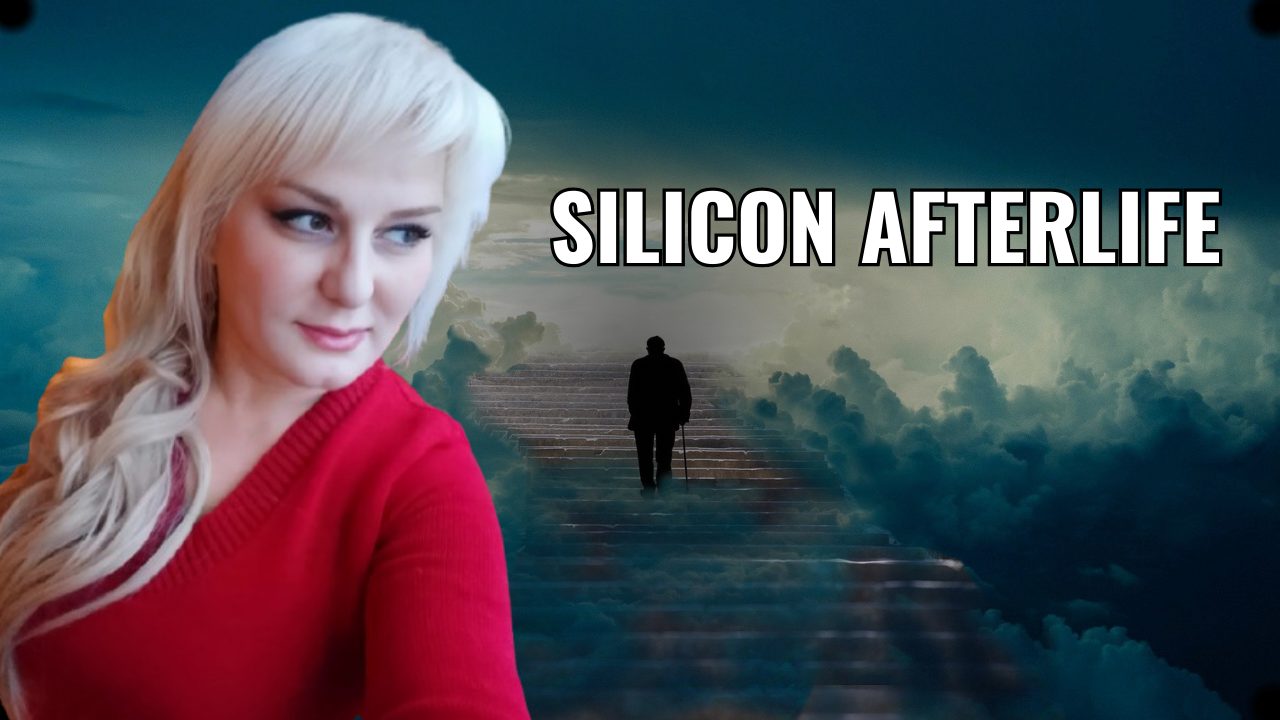
Silicon Afterlife? We’re not just talking about advanced AI anymore. We’re talking about mapping human consciousness, building neuromorphic brains, and ultimately achieving “substrate independence.” This isn’t just a tech fantasy; it’s an emerging engineering trajectory.
In this piece, I break down the 4 critical epochs,from the Connectomic Era to the Persistence Era, that could transform death from an endpoint into a data transfer.For marketers, this means rethinking everything: personalized experiences, data governance, “digital twins,” and the very definition of a customer.
The term “Silicon Afterlife” describes a theoretical future where human consciousness is transferred from biological brains to digital substrates (silicon chips). This concept, often called Whole Brain Emulation (WBE) or Mind Uploading, is currently being researched by organizations like the Carboncopies Foundation.
The roadmap to achieving a silicon afterlife is generally divided into four distinct technical epochs.
The idea of a digital afterlife has long lingered at the edges of science fiction, the sort of notion one might shrug off in polite conversation. Yet, advances in neuroscience, artificial intelligence, and computing architectures have begun to lend the concept a kind of scientific plausibility. Institutions such as the Carboncopies Foundation are now charting what they call a roadmap to the “Silicon Afterlife”, a future in which human consciousness might persist, untethered from the messy constraints of biology.
The journey to digital immortality, as it is imagined, is less a single, spectacular leap than a careful, multidecade progression, each stage defined by crucial technological breakthroughs.
The Connectomic Era (2025–2035)
At the heart of any attempt at digital preservation is the brain itself. Mapping its intricate circuitry, the connectome, is the foundational task. By 2035, researchers hope to complete a full connectome of a mouse brain, a comparatively modest endeavor of roughly seventy million neurons. Human brains, by contrast, are staggeringly more complex: eighty-six billion neurons, trillions of synapses, and a tangle of signaling pathways that defy intuitive comprehension.
Technologies like Serial Sectioning Electron Microscopy (ssEM) make such mapping possible, producing images of breathtaking resolution, but also datasets of a size that defy human comprehension, measured in zettabytes. Algorithms must step in to do the heavy lifting, stitching together the brain’s microscopic mosaics into something intelligible.
The AGI Emergence (2030–2045)
Mapping, however, is only the beginning. Enter Artificial General Intelligence, the indispensable assistant, interpreter, and eventual collaborator. AGI will parse the noise of synaptic data, teasing out the meaningful signals from the background static of biology. It will help verify whether a digital mind preserves the subtleties of subjective experience. At this stage, machines cease to be mere tools, they become co-authors in the reconstruction of consciousness.
The Emulation Epoch (2045–2075)
Assuming connectomes and AGI have done their work, Whole-Brain Emulation becomes conceivable. The first emulated primates may appear in this era, with human trials following in due course. Neuromorphic computing, designed to echo the brain’s spiking networks, will enable digital minds to think at speeds comparable to—or perhaps even surpassing—the biological original. The “Synthetic Cortex” may allow lifetimes of thought to unfold in mere minutes. The primary technical hurdle will be latency: ensuring that silicon minds experience time with a continuity recognizable to themselves.
The Persistence Era (2100+)
Finally, one imagines a world in which stable, substrate-independent digital lives exist at scale. Billions of minds could persist, interact, and evolve beyond the confines of flesh. For those alive today, the bridge to this future may require preservation, vitrification or other methods that maintain the brain’s structural integrity until the technologies of AGI and nanotechnology can bring consciousness online once more.
Engineering the Impossible
This roadmap charts an audacious course, transforming death from an endpoint into, potentially, a kind of data transfer. Yet the engineering clarity does not erase the philosophical and ethical uncertainties. Does a perfect digital copy of a mind retain the continuity of self, or is it a simulacrum, a sophisticated “p-zombie” devoid of inner experience? Who owns these digital souls, and how are they protected from exploitation? And even leaving aside ethics, the hardware requirements are daunting: the fastest GPUs struggle with the demands of simulating even a small mammalian brain.
The Silicon Afterlife remains a work in progress, an enterprise at once staggering in its ambition and delicate in its implications. It is a project that insists, above all, that we confront what it means to be human in a universe where even consciousness might one day be written in code.


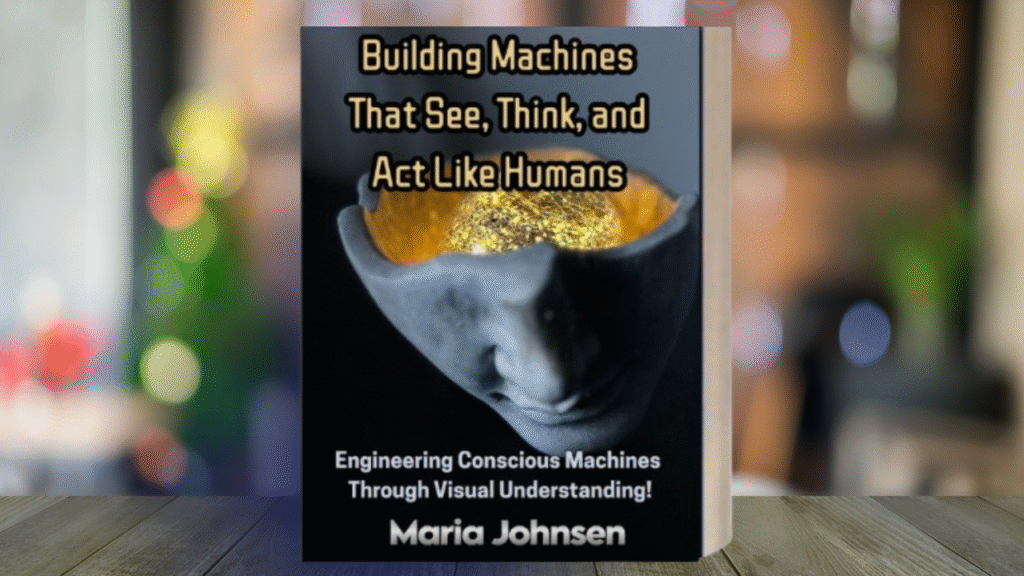 Can machines see and understand the world like we do? Building Machines That See, Think, and Act Like Humans combines neuroscience, AI, and robotics to create a clear, rigorous guide to building visual AGI machines that perceive, reason, and act with human-like awareness. Read this article