
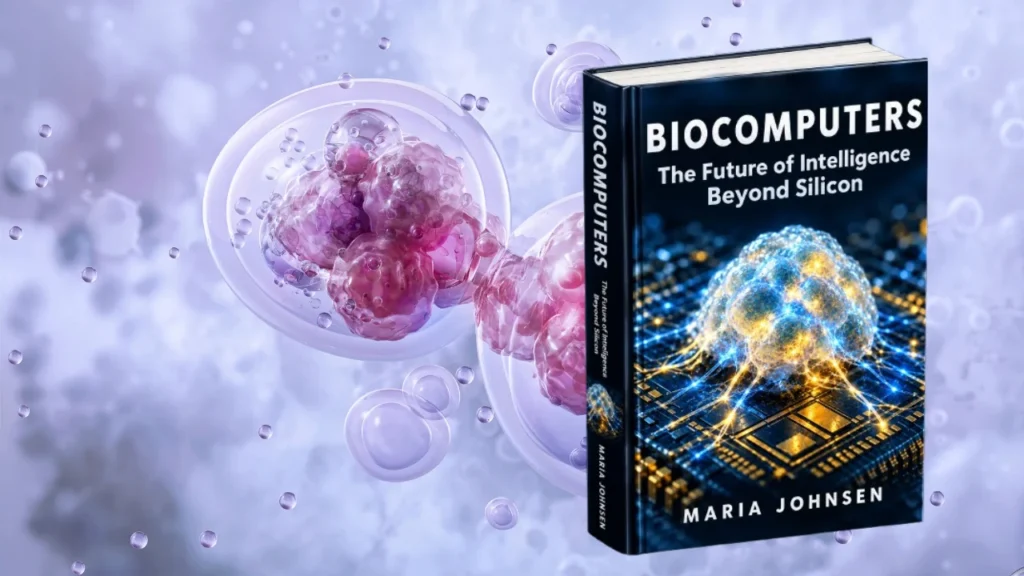
Biocomputers: The Future of Intelligence Beyond Silicon
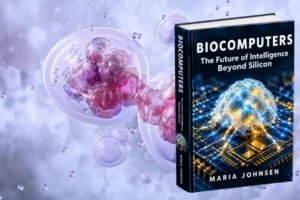
The future of computation may not belong to one technology. It may belong to many.

Beyond Silicon Lies a New Frontier of Intelligence
Silicon computing has transformed civilization.
But computation does not have to happen only inside conventional processors.
Biological systems have spent billions of years evolving extraordinarily sophisticated ways to store information, process signals, adapt to changing environments, and respond to complex patterns.
Today, researchers are beginning to explore how some of those capabilities might be harnessed technologically.
From molecular information storage to engineered cells and living neural networks, a radically different kind of computing is taking shape.
The future of computation may not belong to one technology. It may belong to many.
The Age of Biological Computing Is Beginning

Where Biology and Computing Become One
Imagine a computing system that can adapt rather than simply execute instructions.
A system that responds to electrical stimulation.
A system built from biological material rather than conventional circuitry.
These concepts are no longer confined to science fiction.
Researchers have already demonstrated experiments involving living neural tissue connected to electronic systems, creating extraordinary new questions about learning, computation, and intelligence.
This book examines the science behind these developments and separates demonstrated research from ambitious possibilities.
The Next Computer May Be Built From Life
Beyond Silicon Lies a New Frontier of Intelligence
Explore how the molecule responsible for carrying biological information is also being investigated as an extraordinarily dense medium for storing digital data.
Discover the research exploring laboratory-grown neural tissue and its interaction with electronic systems including experiments in which neurons have learned through electrical feedback.
See how researchers are investigating engineered cells and biological mechanisms for sensing, processing, and responding to information.
Understand why researchers are looking beyond traditional computing architectures and exploring radically different approaches to information processing.
Explore potential applications involving diagnostics, disease detection, drug delivery, and biological systems operating within the human body.
Biocomputing raises questions that are scientific, philosophical, ethical, and legal.
What happens when computation becomes biological?
Where should the boundaries be drawn?
And how prepared are our institutions to deal with technologies that are developing faster than the rules surrounding them?
The emerging world of biocomputing is filled with extraordinary claims.
Biocomputers takes a measured approach.
Technologies that already exist are distinguished from technologies still under development. Experimental demonstrations are separated from future possibilities. Speculation is not presented as established fact.
The result is a grounded exploration of a field where the most fascinating developments may still be ahead.
Written for technologists, researchers, founders, and decision-makers who need more than headlines, Biocomputers moves systematically from molecular foundations to the frontier of what may be possible grounded in real research, honest about its limits, and unflinching about the questions that come next.
If you want to understand where computing goes after silicon, this is where to start. The book ‘s paperback version contains 38 chapter, 627 pages, black and white interior.
Amazon USA Amazon Canada Amazon UK Amazon Italy Amazon Belgium Amazon Australia Amazon Germany
Amazon France Amazon Spain Amazon Sweden
Hardcover is 548 pages white paper color interior.
Amazon USA Amazon Canada Amazon UK Amazon Italy Amazon Belgium Amazon Australia Amazon Germany